
Lighting Size & Installation Guide
How to Calculate the Ideal Fixture Size
To ensure a light fixture feels intentional and proportionate to its surroundings, professional designers rely on specific scaling guidelines. Use the following steps to determine the correct size for any room.
- General Formula for Fixture Diameter
The most reliable method for determining the diameter of a ceiling light is based on the room’s footprint:
- Step 1: Measure the length and width of the room in feet.
- Step 2: Add these two numbers together.
- Step 3: The total from Step 2 directly becomes the fixture diameter in inches—just keep the number and label it in inches.
Example: For a room that is 16 feet wide and 12 feet long, the calculation is 16 + 12 = 28. Therefore, a chandelier or pendant with a 28-inch diameter would be perfectly scaled for the space.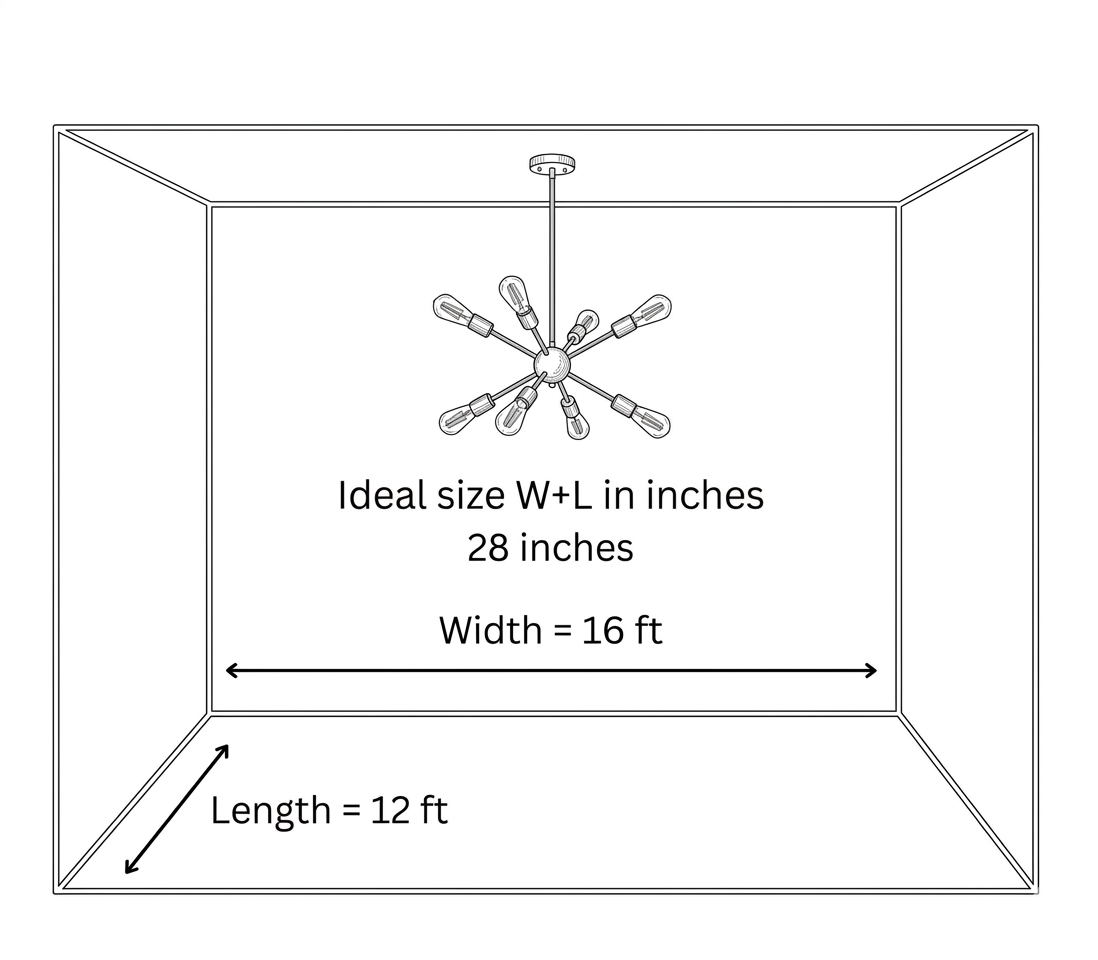
Determining Fixture Height
The vertical scale of a fixture is just as critical as its width, particularly in rooms with varying ceiling heights:
- Guideline: Allow 2.5 to 3 inches of fixture height for every 1 foot of ceiling height.
- Example: For a room with a 10-foot ceiling, the recommended fixture height is 25 to 30 inches (10 feet × 2.5–3 inches per foot).
Hanging Heights and Placement Tips
When hanging fixtures over specific surfaces, such as dining tables or islands, the installation height is vital for both aesthetics and eye-level comfort.
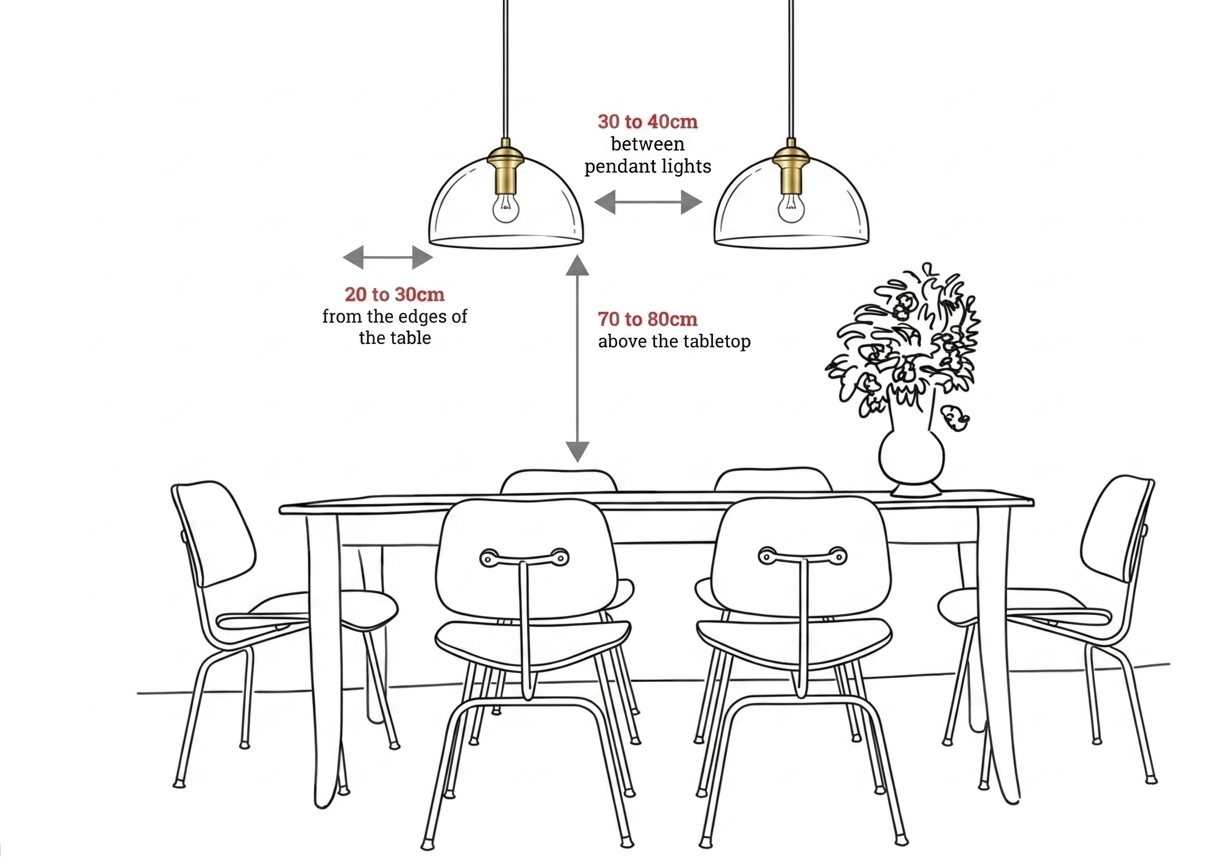
- Dining Tables: The bottom of the fixture should hang 32 to 36 inches above the tabletop.
- Kitchen Islands: Pendants should also maintain a clearance of 32 to 36 inches from the countertop for optimal task lighting.
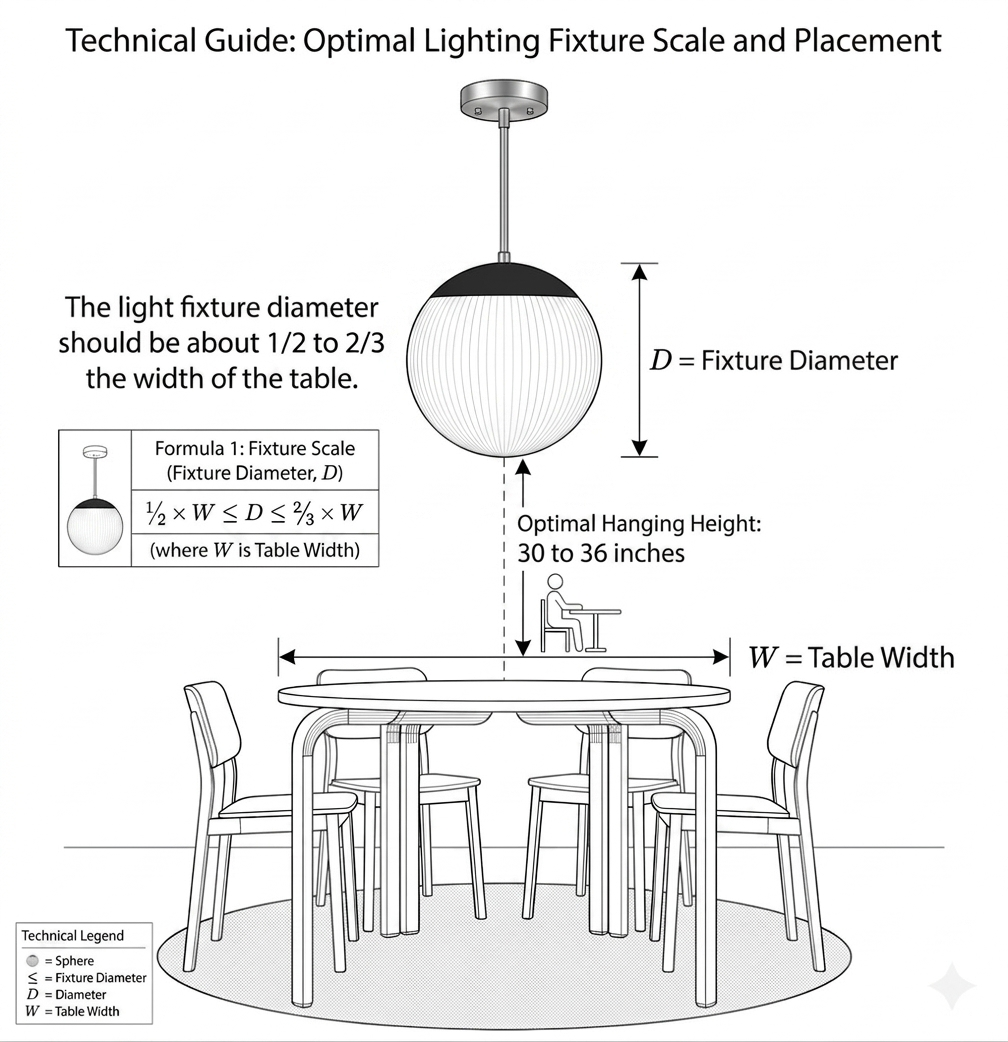
Scale Over Surfaces: A single fixture over a table should ideally have a diameter between 1/2 and 2/3 the width of the table. - Multiple Pendants: If installing a row of pendants, each individual fixture should be approximately 1/4 the length of the surface below.
Lighting Recommendations by Room Type
|
Room Type |
Recommended Fixture Size |
Recommended Lighting Types |
Pro Tip: Hanging & Spacing |
|
Living Room |
Use the L + W formula for diameter. |
Chandeliers, pendants, flush mounts, floor/table lamps. |
Maintain at least 7 feet of clearance from the floor. |
|
Dining Room |
1/2 to 2/3 the width of the dining table. |
Chandeliers, linear pendants, wall scones. |
Center the fixture 32–36 inches above the table surface. |
|
Kitchen |
Each pendant should be 1/4 the length of the island. |
Pendants, recessed lighting, under-cabinet lighting. |
Space multiple pendants evenly to ensure uniform light. |
|
Bedroom |
Use the L + W formula for main ceiling fixtures. |
Flush/semi-flush mounts, bedside lamps, sconces. |
Bedside lamps should be at eye-level when you are seated. |
|
Bathroom |
Use the L + W formula for general ceiling lights. |
Vanity lights, sconces, recessed lighting. |
Mount vanity sconces 65–70 inches from the floor. |
|
Entryway |
Use the L + W formula for diameter. |
Statement chandeliers, flush mounts, sconces. |
Ensure at least 7.5 feet of clearance in high-traffic areas. |
Detailed Room-by-Room Installation Guide
Living Room: Creating a Focal Point
- Chandeliers and Pendants: In a living area, these fixtures serve as the visual anchor. Use the room dimension formula to ensure the scale is appropriate for your layout. For safety and visual flow, always maintain a minimum 7-foot clearance between the bottom of the fixture and the floor.
- Layered Task Lighting: Incorporate table and floor lamps to create "pools" of light for reading or accentuating architectural features. Ensure floor lamps are proportionate to the scale of the neighboring sofas or armchairs.
The Bedroom: Softness and Scale
- Standard Nightstand Lamp Guidelines: To achieve a balanced bedside look, follow these measurements:
- Total Height: Should be roughly equal to the height of the nightstand.
- Lampshade Height: Ideally 1/2 to 2/3 of the lamp’s total height.
- Lampshade Width: Twice the width of the lamp base.
- Base Dimensions: The height should be 1/3 of the total lamp height, with a width half that of the shade.
- Overhead Lighting: Choose flush or semi-flush mounts for soft ambient light. For reading, ensure bedside lamp heights are positioned at eye level when you are sitting up in bed.
Dining Room: The Centerpiece
- Chandelier Scaling: Your dining fixture should complement the table without overwhelming it. Aim for a diameter between 1/2 and 2/3 the width of the table.
- Multiple Pendants: For elongated rectangular tables, installing two or three smaller pendants—spaced evenly—creates a sophisticated, rhythmic aesthetic.
Kitchen: Precision and Performance
- Island Pendants: These are essential for food preparation. Hang them 32–36 inches above the countertop. To avoid a "cluttered" look, each pendant should be approximately 1/4 the length of the island.
- Under-Cabinet Lighting: This is a non-negotiable for a functional kitchen, eliminating shadows on the workspace and adding a warm layer of task lighting.
Bathroom: Flattering Illumination
- Vanity Lighting: To minimize harsh shadows on the face, place sconces on either side of the mirror rather than above it. Mount them 65–70 inches from the floor to align with the average eye level.
- Ambient Light: Use the standard room dimension formula to select a central flush mount that ensures the entire space is well-lit.
Entryway & Hallways: First Impressions
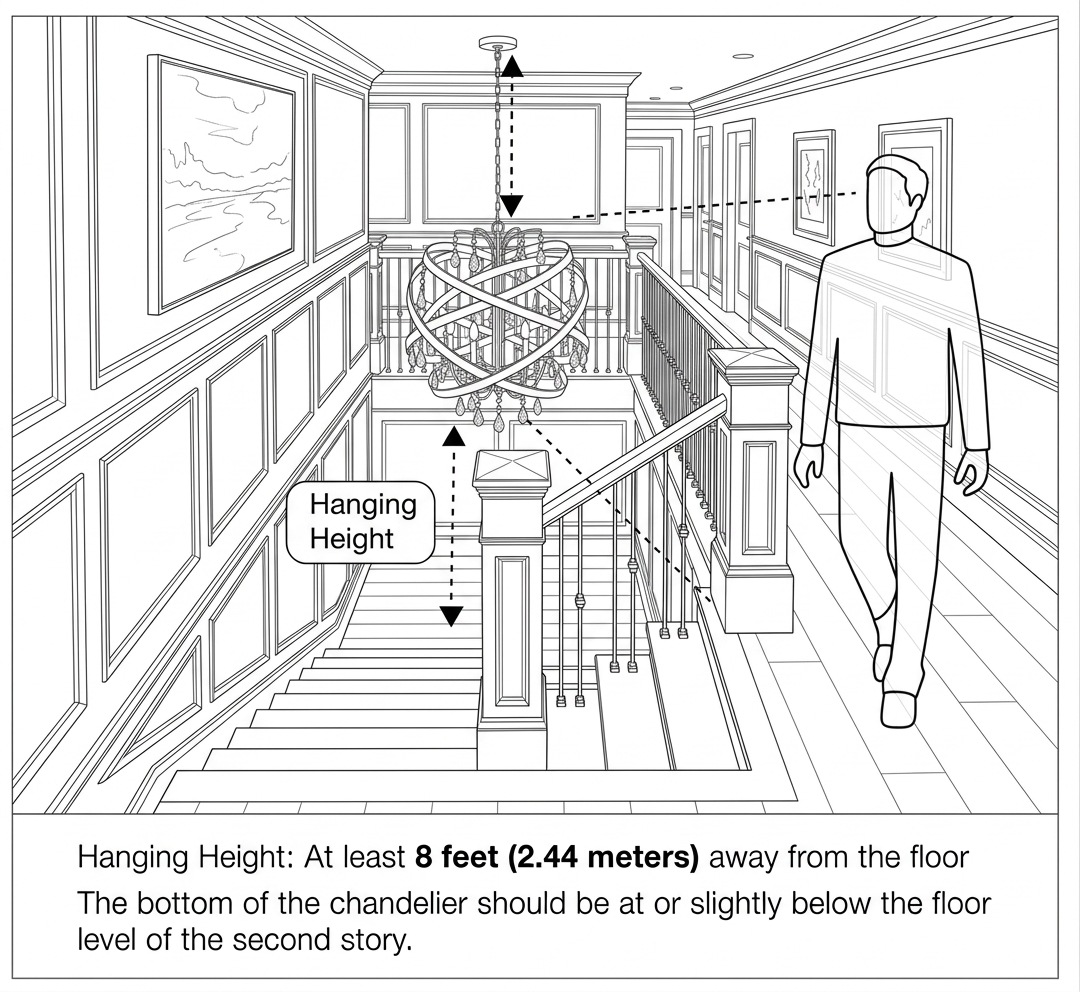
- Entryway Chandeliers: Make a statement with a bold fixture. Ensure it hangs at least 7 feet (or 7.5 feet for higher ceilings) from the floor to provide ample clearance for guests.
- Hallway Spacing: For a continuous, inviting glow, space recessed or flush mount lights every 8–10 feet.
Technical Considerations: Ceiling Height
Ceiling height is the final "rule of thumb" for a balanced interior. A professional standard is to allow 2.5 to 3 inches of fixture height for every foot of room height.
- Low Ceilings (8 feet or less): Stick to flush or semi-flush mounts. These provide excellent light without making the room feel "compressed."
- Standard Ceilings (9–10 feet): This is the sweet spot for chandeliers and pendants. Always verify the 7-foot floor clearance rule for walkways.
- High Ceilings (10 feet or more): Large-scale, dramatic fixtures thrive here. Select taller, multi-tiered designs to draw the eye upward and celebrate the vertical volume of the room.
Final Design Tip
Choosing the right fixture is a blend of mathematics and personal style. By following these dimensional guidelines, you ensure your lighting is not just functional, but a cohesive extension of your home's architecture. Whether you are installing a sleek modern pendant or a grand chandelier, the right scale is the key to a transformative design.